


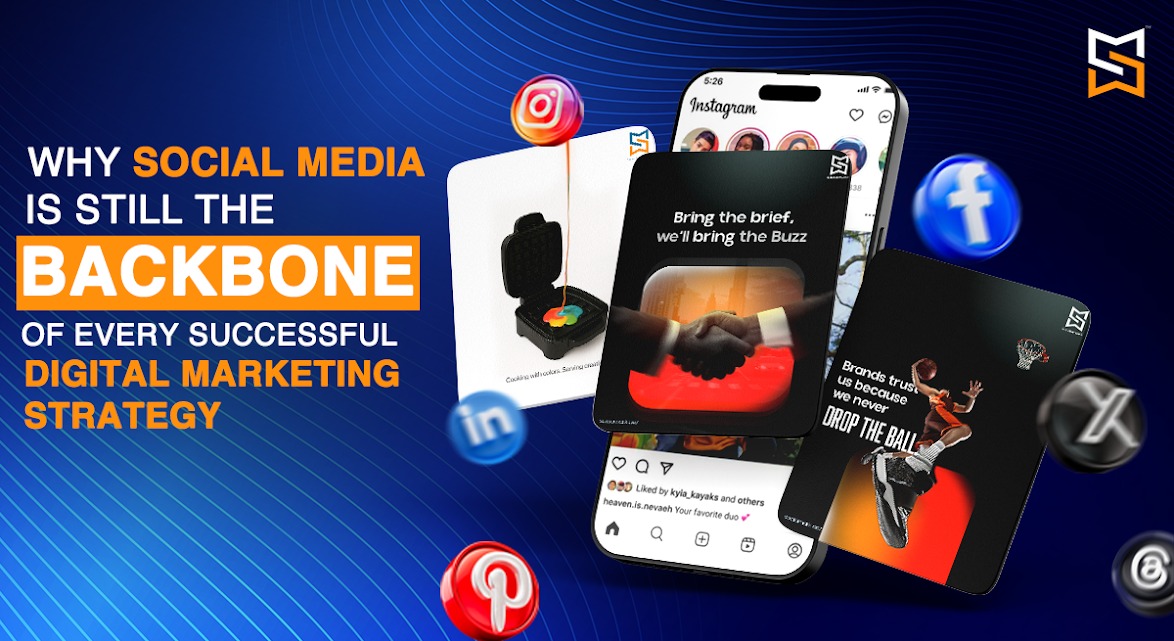

In recent years, search algorithms, privacy policies, and consumer behaviour have changed at a very fast pace. Yet whether or not these changes happen, the social platforms are at the centre of how brands become visible, trusted and engage on the internet.
An effective marketing strategy today cannot be complete without social channels having a key central focus, not as support tools, but as primary touchpoints across the customer journey.
Social platforms have taken over the discovery, consideration, conversions and even brand authority signals that create search visibility.
Why Social Media Strategy Still Shapes Digital Performance
Social media in the modern world is no longer about the frequency or growth of followers. Instagram, LinkedIn, YouTube, and X have become platforms where the distribution is tied to interests, i.e. content performance is determined more by relevance and quality of engagement, rather than the size of the account.
In expert terms the social media has become:
An algorithmically driven discovery engine
A trust-building layer through consistent brand voice
Content and product insight feedback loop
This requires social channels to facilitate the consistency of the messaging throughout the broader online marketing strategy,particularly as more audiences are heading to social sites to research brands without necessarily going to websites.
The Role of Social Media Content Strategy in Algorithm-Driven Feeds
An effective content strategy must now consider all platform ranking signals: watch time, saves, meaningful comments, and repeat engagement. Feeds no longer have consistent performance with generic posts.
High-performing content today revolves around:
Relevance in context and not marketing communications.
Educational or insight-driven formats
Native content styles optimised for each platform
Here, AI has become an essential support layer. More brands are now looking to AI tools in engagement analysis, optimising posting times, and identifying content formats that sustain attention while still relying on human insight needed to keep authenticity.
This balance enables teams to scale output without any editorial loss.
Social Media as a Core Part of the Digital Marketing Strategy
Social media now has a direct impact on the paid media effectiveness, the search engine performance, and brand recognition. Signals generated from engagement including branded searches, shares, and mentions feed into the overall digital marketing strategy, enhancing the effectiveness of carrying out campaigns across channels.
Social media makes it possible to do the following things, unlike in the case of static media:
Real-time content testing
Quick feedback from target audiences
Faster iteration according to performance data
This makes social media one of the most versatile layers within a modern social media marketing plan, particularly in markets where focus moves fast.
AI’s Growing Role in Social Media Execution
The social teams have seen AI transform their functionality, especially at scale. Since predictive analytics and automated content clustering, AI can now be used to see what works prior to campaigns being fully launched.
The existing AI-based applications are:
Making post-performance predictions by the use of past data.
Getting a sentimental analysis of the audience on a scale.
Supporting caption variation and content ideation
However, AI is effective as an aiding layer. To make trust and originality, strategic choices such as tone, positioning, and narrative are still to be made by humans.
Local Expertise and Social Media Marketing Company in Mumbai
In the case of brands that aim at a regional market, a social media marketing company in Mumbai is a bonus. Geography has a huge difference in terms of local context, cultural relevance and audience behaviour.
Strategies that are Mumbai-based tend to give preference to:
- Regional preferences of platforms.
- Local language and cultural nuances
- The indicators of community engagement.
These aspects assist brands in implementing the best social media strategy that fulfils the requirements of the algorithm and the audience.
Why Social Media Remains Foundational
No matter how the platforms keep changing, social media has remained as valuable as ever since it is where the content, data and human interaction meet. This enhances the whole online marketing strategy when incorporated effectively, instead of being an independent channel.
For experts, what is now obvious is that social media is no longer an option or a back burner. It is an interactive system that informs brand perception, demand generation, and long-term visibility.
Conclusion
Social platforms are the keystone to modern marketing, since it develops with user behaviour faster than any other channel. A well-structured strategy, supported by a thoughtful content strategy, and integrated into a broader digital marketing strategy, creates resilience to the changes in the algorithms and market instability.