


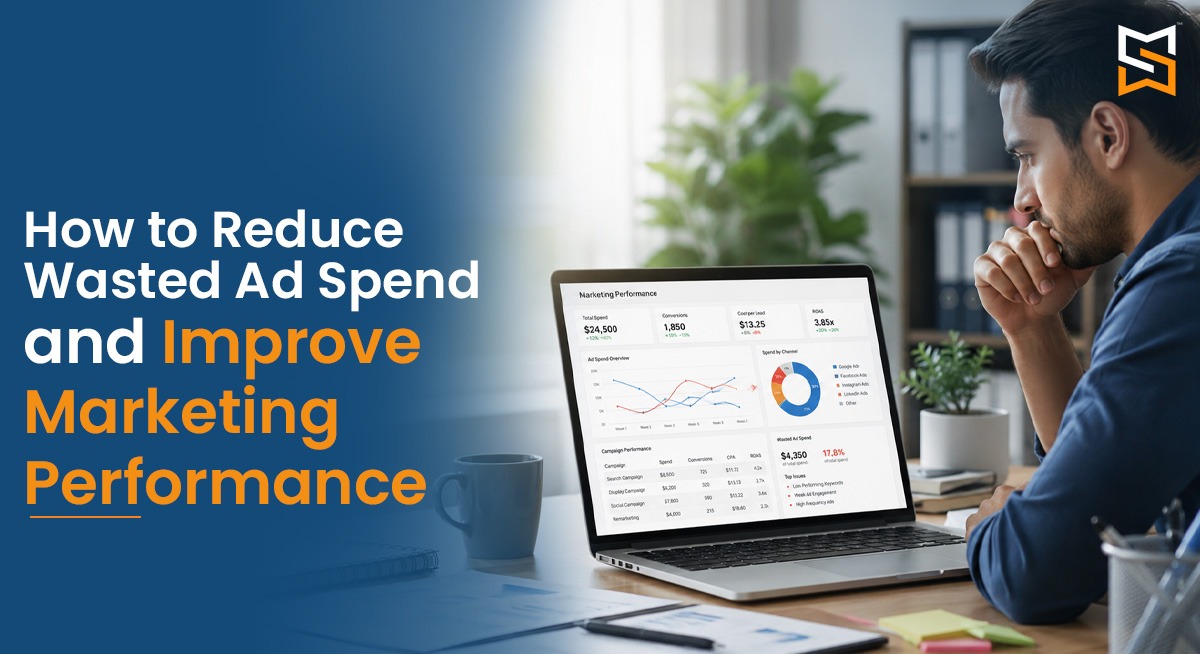

Paid advertising campaigns are one of the most widely used methods to generate leads and create brand awareness. However, many times these advertising campaigns are not properly planned and optimized. This results in a waste of ad spend. Therefore, it is imperative to give considerable attention to a paid advertising strategy to create optimized Google Ads and get the expected digital advertising ROI. To reduce ad spend waste, brands and businesses must put in effort to understand the essentials of advertising, draft a comprehensive PPC ad strategy and launch ad campaigns that are data-driven.
What causes ad spend waste?
Ad spend is considered wasted when your ad reaches the wrong audience. This can be due to several reasons, such as broad targeting, absence of conversion tracking, ineffective ad copies and using irrelevant keywords. Such mistakes hurt ad performance. Brands and businesses must work consistently to monitor the performance of PPC ads and implement PPC performance improvement strategies to address the underlying issues and get the desired results.
Here are some widely recognized PPC optimization strategies:
Target the Right Audience: One of the simplest paid advertising strategies is to target the right audience. This strategy will always align with your ad goals. The advertiser uses crucial data such as geographical location, demographics, interests, etc., to target their audience. This strategy ensures that your paid advertisements are shown only to those who are or are likely to buy the product. Google Ads optimization is done around the audience to attract and drive them to the website.
Focus on high-intent keywords: Keywords are an important part of PPC optimization. It is essential to select and shortlist relevant and high-intent keywords. Avoid using broad search terms. Use keywords that are common in the search query. Use the right mix of long-tail and short-tail keywords. A regular review of the keywords can help you to gauge their performance and identify keywords with a high conversion rate. This data can be used to refine future PPC campaigns.
Use Negative Keywords: Brands and businesses should use negative keywords strategically to avoid the irrelevant appearance of ads. For instance, if you are a premium brand, you can exclude terms like discount, save, cheap, etc. This will help you to save your advertising budget. Therefore, brands and businesses must take efforts to maintain and update the negative keyword list regularly. This is one of the best strategies for Ad performance improvement and reducing ad spend waste.
Optimize your landing pages: Just driving traffic to your website and generating curiosity is not enough. The audience must have a good experience with your brand and website. Therefore, as part of a Google Ads optimization strategy, the brands must make sure their landing pages are planned and optimized well in advance. The load time of the website should be minimal, the dashboard should be easy to navigate, the checkout process should be smooth, and communication on the website must be clear and valuable.
Track conversions: Clicks alone are not a reliable metric to define the success of an ad campaign. Effective conversion tracking should be done. Digital advertisers must monitor actions like cart abandonment, wish listing, final purchase, lead submissions, etc. This data will help one to know the actual performance of the campaign and identify good-performing campaigns.
Build a Smarter Paid Advertising Strategy
A successful paid advertising strategy always commences with clear goals and objectives. Whether it is lead generation, online sales or brand awareness, the campaigns must be measurable and strategically planned. Campaign audits on a regular basis can help to review key metrics like click-through rate (CTR), cost per acquisition (CPA), conversion rate, and return on ad spend (ROAS). The metric analysis also guides advertisers to pause underperforming ads, reallocate their budgets and conduct A/B testing. It enables brands to stay in synchronization with the current trends and optimize their PPC ad campaigns.
Best Practices for Google Ads optimization
Effective Google Ads optimization involves more than selecting the right keywords; it includes regular monitoring, too. Advertisers must pay attention to the quality score, update ad copy and review search term reports to optimize their campaigns for mobile and desktop users. The objective of the paid campaign should be to reach the maximum audience without much spillover.
Conclusion
Advertising waste is a major concern for brands, businesses as well as digital marketers. The reduction of this waste is a major motive of the campaign developers. They use a mix of strategies like testing, monitoring, keyword review, landing page optimization, etc. to reduce ad spend waste and target audience optimally. PPC optimization must include data-driven paid advertising strategy to strategically position ads on major search engines and digital advertising platforms to achieve sustainable growth.
By focusing on conversion tracking, landing page optimization, and continuous ad performance improvement, you can recoup good digital advertising ROI. Therefore, one must invest in optimizing PPC ad campaigns to generate stronger results and higher conversions.
FAQs
FAQ 1: How often should a Google Ads campaign be optimized?
Google Ads campaigns should be reviewed at least once a week, while high-budget or high-volume campaigns may require daily monitoring. Regular optimization helps identify changing search trends, seasonal demand, audience behaviour, and bidding opportunities before they significantly impact campaign performance.
FAQ 2: What is Quality Score, and why does it matter in Google Ads?
Quality Score is Google's rating of the relevance and quality of your keywords, ads, and landing pages. A higher Quality Score can lower your cost per click (CPC), improve ad positioning, and increase the efficiency of your advertising budget. Improving ad relevance and user experience can positively influence this score over time.
FAQ 3: When should businesses consider using automated bidding strategies?
Automated bidding works best when a campaign has accumulated enough historical conversion data. Businesses with clear campaign objectives and consistent conversion tracking can use strategies such as Maximize Conversions, Target CPA, or Target ROAS to help Google's machine learning optimize bids more effectively than manual bidding in many cases.
FAQ 4: Why is competitor analysis important for PPC campaigns?
Analysing competitors helps businesses understand market trends, identify keyword opportunities, compare ad messaging, and evaluate pricing strategies. Regular competitor research can uncover gaps in the market, inspire stronger ad creatives, and help advertisers differentiate their campaigns while making more informed bidding and targeting decisions.
Author: Sonali Jadhav (SEO Head)
Review Expert: Heta Desai Baandal