


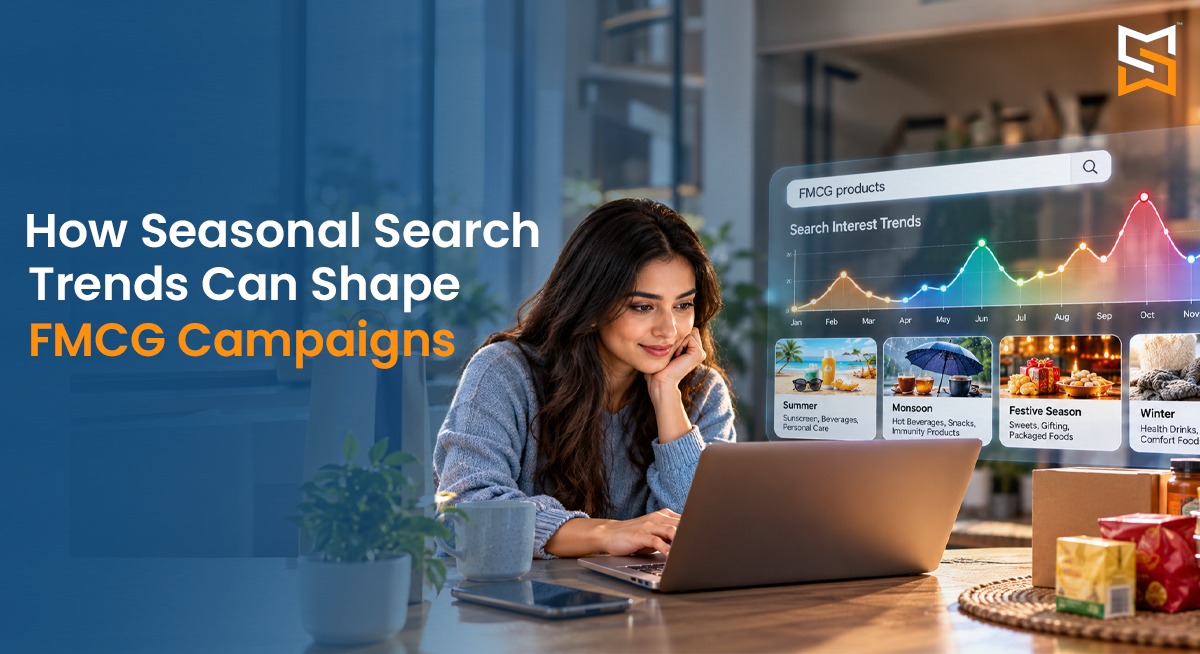

People don't search for products the same way throughout the year. What they need in January can be very different from what they need in may or during Diwali. Think about sunscreen. As summer gets closer, more people start searching for sunscreen or sun protection. In winter, the search can drift towards moisturizers and lip balms.
For FMCG brands, these changes in search behavior can be very useful. They can show when people start thinking about a particular product or problem. This can help you decide when to start a campaign, what message to use, and where to spend your budget. This is the basic idea behind seasonal marketing for FMCG.
What are seasonal search trends?
Seasonal search trends are changes in what people search for at different times of the year. For example, people might start searching for cold drinks and ice cream as summer approaches. Similarly, searches for body lotion or lip balm might increase during colder months.
These changes can happen because of:
Weather and changing temperatures
Festivals and holidays
School or work routines
Seasonal personal-care needs
Gifting occasions
Changes in eating and shopping habits
Why do seasonal surge trends matter for FMCG products?
FMCG is basically a crowded market. When your consumers start looking for a product, they can find many brands competing for their attention. That is why timing matters. If your brand knows that searches for a category usually start increasing in March, you don't have to wait until April to begin advertising. You can start building awareness earlier. This kind of information can help you plan seasonal FMCG campaigns more carefully instead of simply increasing advertising whenever a festival arrives.
How can FMCG brands use search data to plan campaigns?
Search data becomes more useful when you look at the full pattern rather than just focusing only on the biggest number.
Look for patterns that repeat.
One year's data is not enough to call something a seasonal trend. You need to compare the search behavior over several years and check whether the same pattern keeps repeating.
Find the period before the peak.
The highest search volume is not always when a brand should start its campaign. People often begin searching for a product before they actually buy it. Finding this early period gives you more time to reach potential customers.
Understand what people actually want
Don't stop at the main product keyword. For example, someone searching for sunscreen might later search for the best sunscreen for summer. These searches tell your brand what consumers are concerned about. That information can then be used to create Better ads, product pages, and social media posts.
Seasonal consumer behavior can change the marketing message?
Seasonality not only tells you when to advertise, but it can also tell you what to say. During summer, consumers might care more about freshness, cooling, and sun protection. In winter, they might be more interested in moisturization and nourishment. Festivals can bring another set of needs.
Consumers might be looking for gifts or special offers. So simply putting a Diwali special or summer offer on an old advertisement is not enough. You should understand what people actually need during that time. That is where seasonal consumer behavior becomes important.
Using seasonal trends across FMCG digital marketing
Google ads
You can increase keyword coverage and budgets when relevant searches start rising.
SEO and content
Seasonal articles and product content can be published before demand reaches its peak.
Social media
You can create useful reels, posts, and tips around seasonal problems.
This makes search trends useful across the wider FMCG digital marketing strategy, not just paid search.
How to Build a Seasonal FMCG Campaign Strategy
A simple approach is:
Research → Find recurring search patterns.
Validate → Compare multiple years.
Predict→ Identify when interest starts rising.
Plan → Prepare media, creative, offers, and inventory.
Launch → Start before peak demand.
Optimize → Adjust using live campaign performance.
Measure → Compare results with seasonal demand.
So, in short, you can say that good seasonal marketing for FMCG is not just about running an advertisement during Diwali or changing a product creative when summer arrives. It is also about understanding when people start looking for what they are looking for and buying.
FAQs
1. What are seasonal search trends in FMCG marketing?
Seasonal search trends show how consumer searches change during festivals, holidays, weather shifts, and other seasonal periods.
2. How can FMCG brands use seasonal search trends?
Brands can use search trends to identify rising demand and create timely campaigns, content, and promotions around consumer interests.
3. Why are seasonal search trends important for FMCG brands?
They help FMCG brands align their marketing with changing consumer needs and capture relevant search demand at the right time.
4. How can SEO support seasonal FMCG campaigns?
SEO helps brands target seasonal keywords and create relevant content that improves visibility when consumers are actively searching.
5. How can Sociomark India help FMCG brands with seasonal marketing?
Sociomark India helps FMCG brands use SEO, content, social media, and performance marketing to build campaigns around seasonal consumer trends.
Author: Sonali Jadhav (SEO Head)
Review Expert: Heta Desai Baandal