


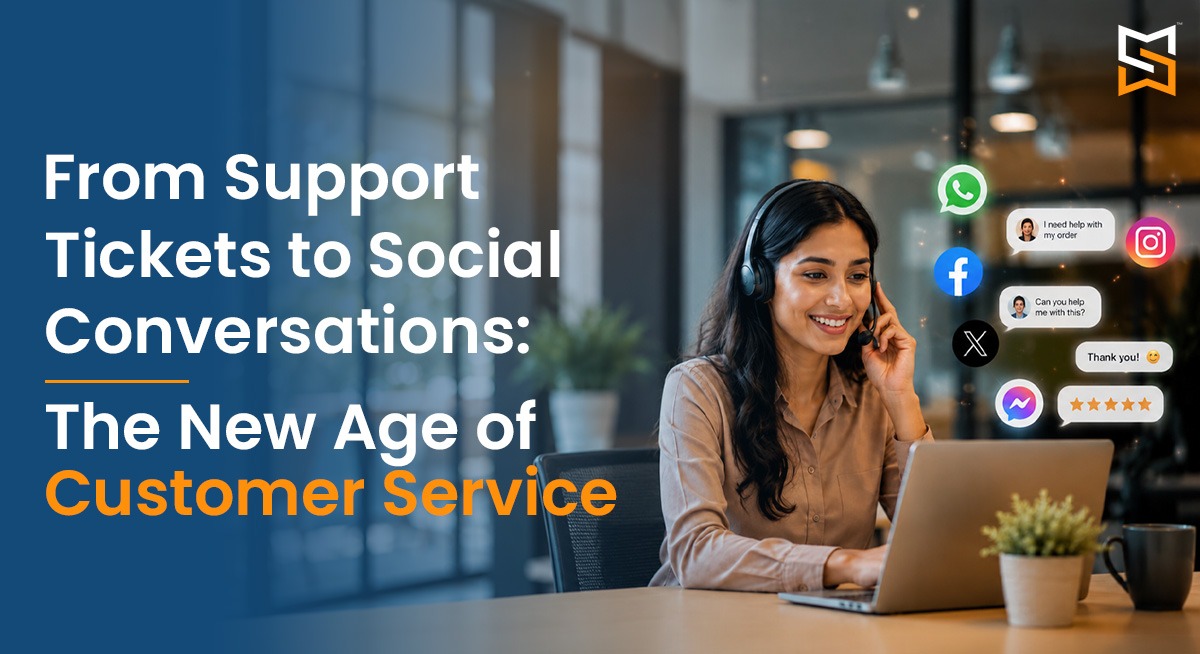

Customer interactions have undergone major changes in recent years. Today, customers no longer appreciate long waiting times, slow responses, and delays. Spending hours just to get a query resolved is a major turn off of this generation of digitally savvy customers. Customers expect brands to be more attentive, engaging and responsible. Therefore, brands and businesses have to focus more on customer engagement to drive more value to the customers and enhance their experience.
Social customer service is a modern technique that provides customer support through social media platforms, including Instagram, X, Facebook, WhatsApp, and more. So, the customers can get answers to their queries directly instead of taking the long route of the ticketing system, customer complaint forums, etc. A brand can interact directly with the customers on these platforms, address their queries and provide an apt response.
Why Customers Prefer Social Conversations
The new age consumers are always on the go. They are very active on social media platforms and spend more time on these platforms sharing their stories, experiences, views, etc. They expect their favorite brands to be active and live on social media platforms so that reporting an issue or sharing feedback is easy and less tiresome.
Online customer support gets faster and more transparent when a brand adopts a social customer service route. They demonstrate that they are truly customer-centric and value customer relationships. However, delayed responses and ignored queries or unsatisfactory answers may hamper the brand's reputation on social media and lead to public criticism, too.
The Role of Social Media Engagement in Customer Experience
Regular Social media engagement goes beyond posting regular updates. It is more about interacting with the target audiences, getting their responses and encouraging their participation in brand stories.
When a brand comments, reshares a reel or acknowledges the feedback given by a customer, it nurtures their relationship and enhances customer loyalty too.
Some of the key benefits of being active on social platforms include:
Improved relations with customers
High trust and credibility
Better customer retention
Repeat business
Enriched customer insights
Moving Beyond Traditional Support Tickets
Conventional ticketing systems are complex. It involves lots of layers. Customers would have to connect with the helpline number, reach the support team and get the ticket generated. This would take a large chunk of time, and many times customers may have to fill forms, get an acknowledgement and wait for the formal update via mail.
Modern consumers are running against time. They expect immediate action and response. Social customer care is all about acknowledging the customer's issue instantly and providing them with real-time updates. If the issue is major, social media can be used by brands as the first point of contact before connecting with the consumers via private communication channels. This contemporary approach combines speed and personalized services. It enriches the customer journey and smooths the support process.
Social Customer Service Builds Brand Reputation
Consumer interaction can contribute significantly to brand reputation management. Since the presence of the brand is on social media, the conversations are public and therefore, the brand tone should be polite and empathetic. They must demonstrate responsibility and accountability. The transparency and agility of the brand towards its consumers should be evident in the conversations.
Customers appreciate brands that respond quickly to their queries, accept their responsibility and give practical solutions. The constant follow-up and respectful conversation nurture their relationship. The positive public interactions are one of the best testimonials for the brands. It has the power to influence others on social media and drive more organic traffic.
The Future of Modern Customer Service Is Social
Apart from adopting a customer-first approach, businesses must adopt some modern customer service practices, such as maintaining a consistent brand voice across all platforms. The brands must also personalise their interactions so that a customer feels valued. The brand must be attentive and should monitor its brand mentions. Sometimes customers don't tag brands but may have feedback or a query concerning a brand product.
Those conversations should also be acknowledged and reviewed by the brand. Moreover, some sensitive conversations shouldn't be encouraged online; they must be moved to private messages to protect the brand image. A vigorous and timely follow-up after resolving a customer concern is equally important. As Sociomark believes, combining AI-powered tools with a well-planned social media strategy enables brands to deliver faster, more personalized customer support while strengthening customer relationships.
Consistency is crucial. Customers expect the same level of service regardless of the platform. Whether the interaction happens through Instagram, Facebook, LinkedIn, or a website, the communication must be meaningful, instant, and satisfactory.
FAQs
FAQ 1: What is social listening, and how does it improve customer service?
Social listening is the process of monitoring online conversations, brand mentions, industry keywords, and customer sentiment across social media platforms—even when your brand isn't directly tagged. It helps businesses identify customer concerns early, respond proactively, understand audience preferences, and uncover opportunities to improve products, services, and overall customer experience.
FAQ 2: How can businesses measure the success of their social customer service strategy?
Businesses can track the effectiveness of social customer service using key performance indicators (KPIs) such as average response time, first response rate, resolution time, customer satisfaction (CSAT), Net Promoter Score (NPS), sentiment analysis, engagement rate, and repeat customer rate. Regularly monitoring these metrics helps brands identify areas for improvement and deliver a more consistent customer experience.
FAQ 3: Which industries benefit the most from social customer service?
Social customer service is valuable across almost every industry, but it is especially beneficial for eCommerce, retail, hospitality, healthcare, banking, education, travel, telecommunications, and SaaS businesses. These industries receive a high volume of customer inquiries on social media and can significantly improve customer satisfaction by providing timely, personalized support.
FAQ 4: Should businesses automate customer support on social media?
Automation can improve efficiency when used appropriately. AI chatbots and automated responses are effective for handling common questions, routing inquiries, and providing instant acknowledgements. However, complex issues, complaints, or emotionally sensitive conversations should always be handled by human support teams to ensure empathy, accurate resolutions, and a positive customer experience.
Author: Sonali Jadhav (SEO Head)
Review Expert: Heta Desai Baandal